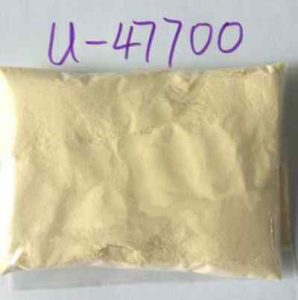
The intriguing substance, commonly known as U-47700, initially lacked a official designation beyond its research identifier. Its original chemical name is N-(3-hydroxyphenyl)-N-[1-(4-methoxyphenyl)propan-2-yl]acetamide, a somewhat lengthy designation reflecting its synthetic origin. Developed in the early 2000s by Dr. Unna at the Laboratory of Bonn in Germany, U-47700 was originally synthesized as a potential research analgesic, acting as a potent agonist for the kappa opioid receptor. Its development stemmed from efforts to find alternative pain medications – a quest that ultimately led to u-47700 pills looks like its existing notoriety far removed from its intended therapeutic use.
Unraveling the Vernacular Names for U-47700
U-47700, a synthetic painkiller , is often called by various slang names, making identification difficult. These unofficial labels shift frequently, complicating attempts to monitor its presence. Users and suppliers might use terms like “Pink,” reflecting its original appearance ; “Blue Joker,” a combination possibly linked to a particular batch ; or simply “U,” a abbreviated version of the compound's name. This important to note that these monikers are unstable and can differ geographically and over durations.
- Red
- Joker
- U
The Do U-47700 Pills Look Like An Graphic Explanation
Understanding the appearance of U-47700 capsules can be challenging, as they are often produced in varying shapes by various illicit operations . Commonly, these compounds are found as small rectangular pressed blocks, but variations are frequent . You might encounter them in shades ranging from white to gray . Sometimes , they can also be purple , although these colors are less frequent . The size is typically approximately 5-8 millimeters in size and around 2-4 small units in breadth . Note that the is simply a general overview and the precise look can differ significantly.
The Dark Web & U-47700: Examining Online Sales
The shadowy corner of the dark web has become a notorious platform for the prohibited trade of dangerous substances, most lately drawing focus due to the presence of U-47700, a potent opioid. Studies reveal a surprisingly accessible network where individuals can buy this and other synthetic drugs, often with few oversight or supervision. This situation raises serious fears about public safety and the simplicity with which harmful products can be distributed globally, prompting authorities to heighten their actions to disrupt these online activities.
U-47700: Assessing the Hazards and Purchasing Process
U-47700, a research opioid , presents significant risks to users who contemplate to purchase it. Its strength is thought to be far exceeding that of morphine , making simply a small dose potentially lethal. Lack of sufficient data on its long-term impacts and unclear combinations with other drugs contribute to its unavoidable hazard . As a result, attempting to buy U-47700 is highly warned against and poses a grave hazard to life.
Transcending the Identification: Investigating the Genuine Identity of U-47700
U-47700, initially recognized as a prototype chemical compound, quickly became something far more troubling. Overlooking the straightforward label obscures the profound implications of its actions and likely consequences . Instead of centering solely on its chemical structure, a deeper examination reveals a peculiar ability to interact with the opioid receptor system, generating effects that are substantially more potent than many conventional analgesics. Understanding its true disposition requires transitioning beyond the mere grouping and delving into the scientific mechanisms that support its unique activity . This requires a holistic approach, considering not just its chemical properties, but also its influence on organic systems and its function within the larger framework of opioid pharmacology.
- Additional investigation is required to completely understand its entire scope .
- Ethical considerations surrounding its abuse are of critical importance .
- Public knowledge regarding its hazards is necessary for mitigation of negative effects.